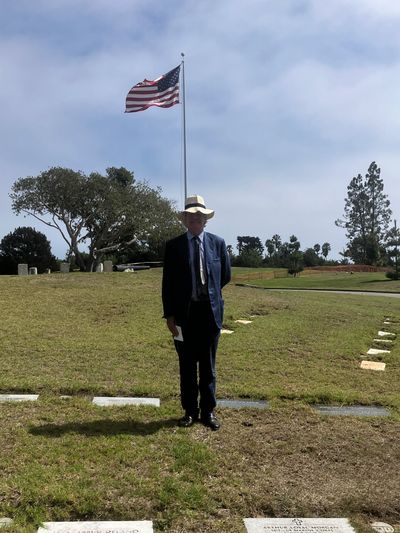
Give Me Blucher or Give Me Night!
⚔️ Napoleon & Einstein, Blücher & Smith — Who Will Be the Duke of Wellington?
History turns on strange pairings. Moments when two seemingly unrelated figures, separated by centuries, suddenly rhyme — and a civilisation realises it has seen the pattern before.
Today, as Britain confronts a constitutional and cultural crisis, a new historical analogy has emerged:
- Einstein played the role of Napoleon: the brilliant conqueror who reshaped the landscape, overturned the old order, and enthroned a false worldview.
- Wolfgang Smith now plays the role of Blücher: the unexpected, decisive force arriving late on the field, breaking the spell of the conqueror and restoring the possibility of order.
The question that follows is unavoidable:
Who will be the Duke of Wellington?
Who will take the breakthrough of the Entanglement Theorem and translate it into the political, cultural, and constitutional restoration Britain now requires?
🔭 I. Napoleon and Einstein: The Conquerors of Worlds
Napoleon conquered Europe with armies. Einstein conquered the twentieth century with atomism.
Both swept away older structures:
- Napoleon shattered monarchies and traditional sovereignties.
- Einstein shattered classical metaphysics and enthroned a universe of parts — a worldview now collapsing under its own contradictions.
Both were geniuses. Both were irresistible. Both created worlds that could not endure.
Napoleon’s empire collapsed because it denied the organic, inherited order of nations. Einstein’s atomistic worldview is collapsing because it denies the organic, inherited order of reality.
In both cases, the conqueror’s triumph contained the seeds of its own undoing.
🌩️ II. Blücher and Smith: The Unexpected Return of the Whole
Blücher arrived at Waterloo when all seemed lost. He did not replace Wellington — he made Wellington possible.
Wolfgang Smith’s Entanglement Theorem plays the same role.
It arrives at the moment when:
- atomism has exhausted itself,
- the mechanical worldview has fragmented the nation,
- politics has been reduced to the management of a heap of discrete variables.
Smith’s theorem does not merely critique atomism; it refutes it.
It demonstrates that unity is ontologically prior — that the whole is real, while the part is an abstraction. It reveals that reality is structured from above, not assembled from below.
Smith is not the political restorer; he is the metaphysical cavalry. He makes restoration possible.
🏛️ III. Britain’s Waterloo Moment
Britain is now in a Waterloo moment.
The Assembly Paradigm — the belief that the nation is an aggregate of individuals, committees, and managerial units — has reached its limit. This is not merely a policy failure; it is a collapse of the ontology of the state.
When a society abandons the primacy of the whole in favour of a mechanistic, atomistic view, it ceases to govern and begins merely to administer decline.
We are witnessing a fiscal manifestation of this ontological decay: the interest on the national debt now exceeds expenditure on the defence of the realm. This is the Fergusonian threshold of national exhaustion — a signal that the state has prioritised the survival of its administrative, debt‑based apparatus over the preservation of the nation as a living form.
The structural crisis is total:
- Ontological Inversion: treating the nation as an aggregate of parts rather than a singular living whole.
- Constitutional Fragmentation: devolution severing the vertical unity of the constitution.
- Institutional Hollowing: the Crown‑in‑Parliament reduced to managerial oversight.
- Cultural Dispossession: shared inheritance replaced by identity abstraction.
Can a nation survive if it denies its own wholeness? The Entanglement Theorem says no.
Britain must once again align its governance with the ontological reality of the whole — or it will cease to be Britain.
🧭 IV. Who Will Be the Duke of Wellington?
Wellington was not the philosopher. He was the statesman who understood the moment.
He recognised that Napoleon’s brilliance had destabilised Europe, and that the task was now to restore order, not merely win battles.
Today, Britain awaits its Wellington:
- someone who grasps the metaphysical significance of Smith’s theorem,
- someone who understands that the crisis is ontological, not administrative,
- someone who can translate whole‑first reality into whole‑first governance,
- someone who can restore the vertical unity of the constitution,
- someone who can reintegrate the nation into its inherited form.
Smith has broken the spell. But someone else must rebuild the world.
🌱 V. The Road Ahead
The analogy is not rhetorical. It is structural.
- Einstein/Napoleon: the conquerors who enthroned a false worldview.
- Smith/Blücher: the unexpected force that restores the primacy of the whole.
- Wellington: the figure who completes the restoration.
Britain now stands between Blücher and Wellington.
The metaphysical cavalry has arrived. The question is who will lead the political restoration.
All roads henceforth lead from Smith’s theorem. GIVE ME WELLINGTON OR GIVE ME NIGHT!